



























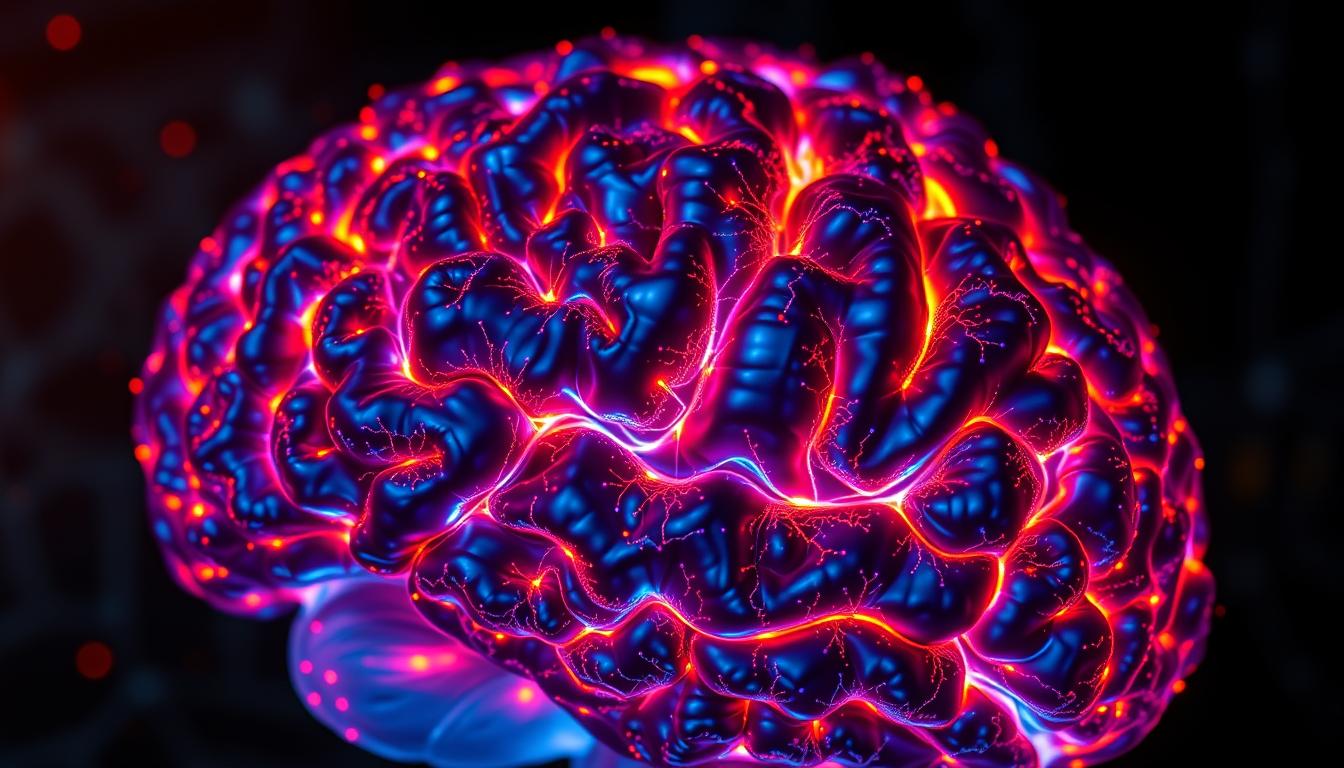
Emotional memories shape our lives in ways facts can’t. Think of a scary moment or a joyful event. These memories stay vivid for years. Our brains focus more on feelings than facts.
A study with 148 participants showed this. Brain scans revealed emotional stimuli are remembered better than neutral data. The amygdala and hippocampus, key for emotions, showed activity during these moments.
This proves emotions make memories stronger. When people recall emotional events, their brain activity increases. Even small changes, like in depressed people, can weaken this process.
This is similar to mouse studies on fear memories. The findings were published in Nature Communications. They show how emotional events leave lasting marks in our minds.
Researchers at Columbia University and the University of California, San Francisco made more discoveries. They found disrupting brain activity affects emotional memories. This research, funded by NIH grants, shows why emotional experiences last longer than facts.
Understanding this could change how we learn and support mental health. It’s a powerful insight into how our brains work.
The Science Behind Memory Formation
Emotional experiences make a big impact because the brain focuses on them. The amygdala function acts like an alarm for emotions like fear, joy, or surprise. It tells the hippocampus, a key area for emotional memory formation, to work faster.
When we’re stressed, our brain chemistry changes. Hormones like cortisol help memories stick. This is why big events, like JFK’s assassination, stay clear in our minds for years.
“Emotional arousal doesn’t just enhance memory—it reshapes it,”
say neuroscientists. They point out that we remember key details well but forget others. This is why big emotions, like heartbreak, stay with us longer than everyday events.
The Influence of Personal Experiences
Our autobiographical memory is a mix of moments shaped by emotional context. What we remember is not just facts but how those facts made us feel. A wedding, a loss, or even a sunset’s color becomes a lasting memory because of its personal significance.
Two people at the same event might remember it differently. This is because of their unique subjective experience.
“Subjective experiences can range from something as simple as seeinging a color to something as major as losing a loved one or getting married.”
Stress hormones like cortisol make autobiographical memory stronger during intense moments. This is why traumatic or joyful events stick in our minds. Yet, this process isn’t perfect.
Memory bias can change traumatic memories, making them less clear but more emotionally charged. For example, a first day at school might be remembered as thrilling or terrifying. This depends on how the event felt to us.

Our brains focus on memories tied to our core values or emotions. A promotion might feel like a triumph to one person but stressful to another. This is why two friends at a concert might later disagree on whether it was “awesome” or “overwhelming.”
The brain’s filter picks what matters most to us, letting the rest fade away.
Even small daily moments can become powerful memories through emotional context. A rainy afternoon might stay in memory if it was a breakthrough or heartbreak. These moments shape who we are, based on how we felt in the moment.
The Connection Between Emotion and Storytelling
Emotional storytelling connects deeply with narrative memory, a natural human ability. We remember stories filled with emotion better than facts. Our brains light up when we hear engaging tales, linking emotion and memory.
Studies show that story structures with ups and downs help us remember more. They engage our senses and emotions at the same time.
A 2021 study in Proceedings of the National Academy of Sciences found something interesting. People listening to stories showed the same brain activity during emotional parts. MRI scans showed their brains responded the same way, creating a shared memory.
Scenes that moved us the most triggered oxytocin, a hormone linked to empathy. This hormone helps us connect emotionally, making stories like those in TED Talks or Pixar films unforgettable.
Teachers and marketers use this science to their advantage. Teachers who use stories in lessons see better recall. Brands like Nike create ads with emotional arcs to build loyalty.
Whether in schools or offices, emotional storytelling makes complex ideas relatable. It turns data into lasting memories. Our brains are wired to love stories, making them the best way to connect and remember.
How Emotions Affect Learning
Emotional learning is vital in education psychology. When we link information to emotions, our brain tags it for priority. For instance, a math lesson with a fun experiment sticks better than a boring lecture.
Positive feelings like curiosity or pride boost memory and learning. Happy students solve problems quicker because serotonin strengthens neural connections.

Classrooms that use emotional stimuli see better results. A study found 49% of disengaged workers felt less capable at work. This shows how negative emotions can distract us.
On the other hand, positive anticipation sharpens focus. Teachers can use this by balancing challenges with encouragement. Short-term excitement boosts performance, but too much stress weakens memory.
Education psychology also looks at the SEEKING system, which boosts motivation. Lessons that spark curiosity make students more active learners. Even confusion can deepen understanding if managed well.
D’Mello’s research shows that confusion during problem-solving can lead to better results. Using storytelling and interactive projects aligns emotional states with learning goals. This keeps cognitive processing at its best.
The Role of Social Interactions
Human social memory grows from shared experiences. Moments like weddings or road trips stick in our minds. These relationship memories are influenced by those around us.
As researchers say, understanding others’ emotions boosts our emotional smarts.
“Emotions are the glue of social life.”
Studies reveal that interpersonal emotions make memories stronger. In one study, 48 students remembered emotional stories better than neutral ones. But, groups sometimes forgot important details.
This shows a unique aspect: social bonding strengthens emotional bonding but can also blur facts. For example, talking about a scary movie with friends might make the memory more intense. Yet, you might misremember parts of the story.
Why does this happen? Emotional contagion makes events feel more intense. A concert’s loud crowd becomes part of your relationship memories. But, mixing perspectives can lead to errors.
When one person recalls a vacation detail wrong, others might believe it too. This shows how social ties deepen emotional connections but can also make memories less accurate.
So, when you share a laugh or face a challenge, your brain is working hard. Social interactions create memories and shape how we feel about them. Finding a balance between group discussions and solo reflection can help keep the warmth and truth of those moments alive.
The Language of Emotion
Emotional vocabulary shapes how we process and remember feelings. Naming emotions like joy or anxiety activates brain areas linked to linguistic processing. This strengthens memory enhancement techniques. Dr. Jill Bolte Taylor’s research shows that naming an emotion during stress can calm the amygdala in 90 seconds.
This transformation turns raw emotion into manageable memories.
“Labeling what you’re feeling tamps down activity in the amygdala,” explains Dr. Taylor’s work, showing how emotion labeling turns chaos into clarity.
Cultural differences show how cultural emotional expression varies worldwide. English speakers categorize facial expressions into distinct emotions like “happiness” or “anger”. Herero speakers group expressions into broader categories. These differences reflect how language molds emotional perception and recall.
Recent studies in linguistic processing show labeling emotions during stress reduces physiological tension. A 2023 Nature Human Behaviour study found high-frequency brain waves in the hippocampus and amygdala boost memory for emotional words like “dog” over neutral terms like “chair”. Practicing emotion labeling daily—like journaling feelings—helps encode experiences more vividly.
The Effects of Context on Memory
Contextual memory is all about remembering life’s moments with the help of our surroundings. A study at Beckman’s lab showed that emotional events stick in our memory better when we remember sensory details. For example, people who saw high-arousal images remembered locations and orders 15% better than those who saw neutral scenes.
Sensory memory is like a doorway to the past. The smell of chemicals or the sound of a supervisor’s voice can bring back memories. State-dependent recall helps us remember past emotions when we revisit places like a café where a breakup happened.
Researchers used 3 Tesla MRI scans to study how our brain remembers emotions. They found that negative images made stronger connections in our brain than neutral ones. This is why trauma survivors might link unrelated cues like smells or sounds to past events, a common issue in PTSD.
As we get older, our memory for details in context can decline by up to 15%, according to 2021 data. But, focusing on full sensory experiences can slow this down. Therapists use these ideas to help people recover lost memories, turning environmental cues into healing tools.
The Role of Culture in Emotional Memory
Culture plays a big role in how we remember and feel emotions. Studies show that North Americans remember personal details better than East Asians. East Asians, on the other hand, are great at recognizing patterns.
For example, North Americans do better at remembering similar events (0.45 vs. 0.35). East Asians, though, are better at matching patterns. These differences show how culture shapes our memories and emotions.

Children in Euro-American cultures often tell detailed stories about their lives. This is influenced by their cultural background. In contrast, East Asian children tend to focus more on group settings.
This reflects the values of individualism in Western cultures and group harmony in collectivist societies. Even how parents talk about emotions matters. Euro-American parents use detailed storytelling, while Chinese parents focus on practical lessons.
Research shows that cultural values like “Benevolence” or “Power” affect what we remember. Euro-Americans tend to remember more childhood memories because of their storytelling habits. East Asians, on the other hand, might focus more on shared experiences like family rituals.
These patterns are passed down through generations, influencing our cultural identity. Understanding these differences helps us build empathy across cultures. It shows that emotional memory is as diverse as humanity itself.
Emotional Health and Memory
Emotional regulation is key to keeping our minds healthy and preventing memory problems. Long-term stress or unresolved trauma can harm the hippocampus, our brain’s memory center. This makes it tough to remember or create positive memories.
Depression can trap our minds in a cycle of negative thoughts, overshadowing happy moments. A study found that sadness linked to mental health issues can damage personal connections and happiness. This strain affects our thinking abilities.
“Of course, sadness is a marker for depression, and that’s a tough, quiet killer of human feeling, relationships, and happiness.”
Using the 90-second rule can help manage emotions and reset our brain’s focus. Mindfulness and changing how we think about stressful events can also help. Research shows that chronic stress can hurt memory, but emotional control can help restore balance.
Studies show that men and women process emotional memories differently. Their amygdala activity changes during stress responses.
Mental health greatly influences how we remember and recall memories. Feeling positive helps us learn better, while anxiety makes us focus on threats. Taking care of our emotional well-being strengthens our brain’s ability to remember.
By focusing on mental health, we can build a mind that remembers the good stuff. We can avoid letting negative thoughts control our memories.
Practical Applications of Emotional Memory
Learning how emotions shape our memories can change our daily lives. For students, linking facts to feelings helps them remember better. Imagine a history date as a dramatic scene to make it stick.
This simple trick turns hard data into stories we remember. It’s a powerful memory technique.
Emotional intelligence matters more than IQ when it comes to success.
Daniel Goleman’s work shows how emotional smarts help in work. Leaders who get their team’s feelings can make presentations that stick. They use the “Peak-End Rule” to focus on key moments and end strong.
Sales teams can connect with clients by recalling their past feelings. This turns data into personal stories.

In our daily lives, simple tricks like remembering names with images work. Picture someone’s name with a vivid image, like “Sarah the surfer” for a beach feel.
Writing down memories with sensory details helps us remember. Even managing stress uses these ideas. Mindful breathing calms the amygdala, reducing stress.
These everyday applications make complex ideas simple. Whether learning a new skill, improving work relationships, or enjoying life, emotional memory helps. It turns science into practical tools for better learning, communication, and self-awareness.
Future Areas of Research
Recent memory research is uncovering how emotions shape our brain paths. Scientists use brain scanning technology like fMRI to see how the hippocampus stores memories. They find that positive and negative memories are stored as different “blue” and “red” clusters.
These neuroscience advancements show that certain cells can change traumatic memories. For instance, 2021 studies found that MDMA can change how PTSD patients recall fear during therapy.
New scientific developments like optogenetics let researchers control brain circuits. This could lead to future applications like personalized treatments for anxiety or depression. But, many questions remain, like how aging affects memory and if AI can predict which memories will last a lifetime.
Researchers also study why thinking about the future activates the same brain areas as remembering the past. They found that Parkinson’s patients with damaged mental time travel struggle with planning. This suggests new ways to improve education by linking lessons to students’ goals, making learning more emotional.
As technology advances, so do ethical debates. How far should we go with memory editing? Finding a balance between innovation and responsibility will guide this field. The next decade will likely see major breakthroughs in understanding and healing the mind’s emotional landscape.
Conclusion: Emotions Are Key
Emotional understanding shows how feelings mark our memories. The brain’s amygdala and visual cortex make sure we remember moments filled with emotion. This is how our memories are linked to our feelings.
This connection helps us deal with life’s ups and downs. It gives us practical wisdom for every situation.
Think of emotions like clouds in your mind. A balanced view lets you see their impact without getting lost in them. By watching your emotions, you can understand your memories better.
This understanding helps in many areas. It makes learning better, improves healthcare, and strengthens relationships. It also helps in making decisions.
By knowing how emotions shape our memories, we can learn more and grow. This knowledge helps us and organizations grow together.