



























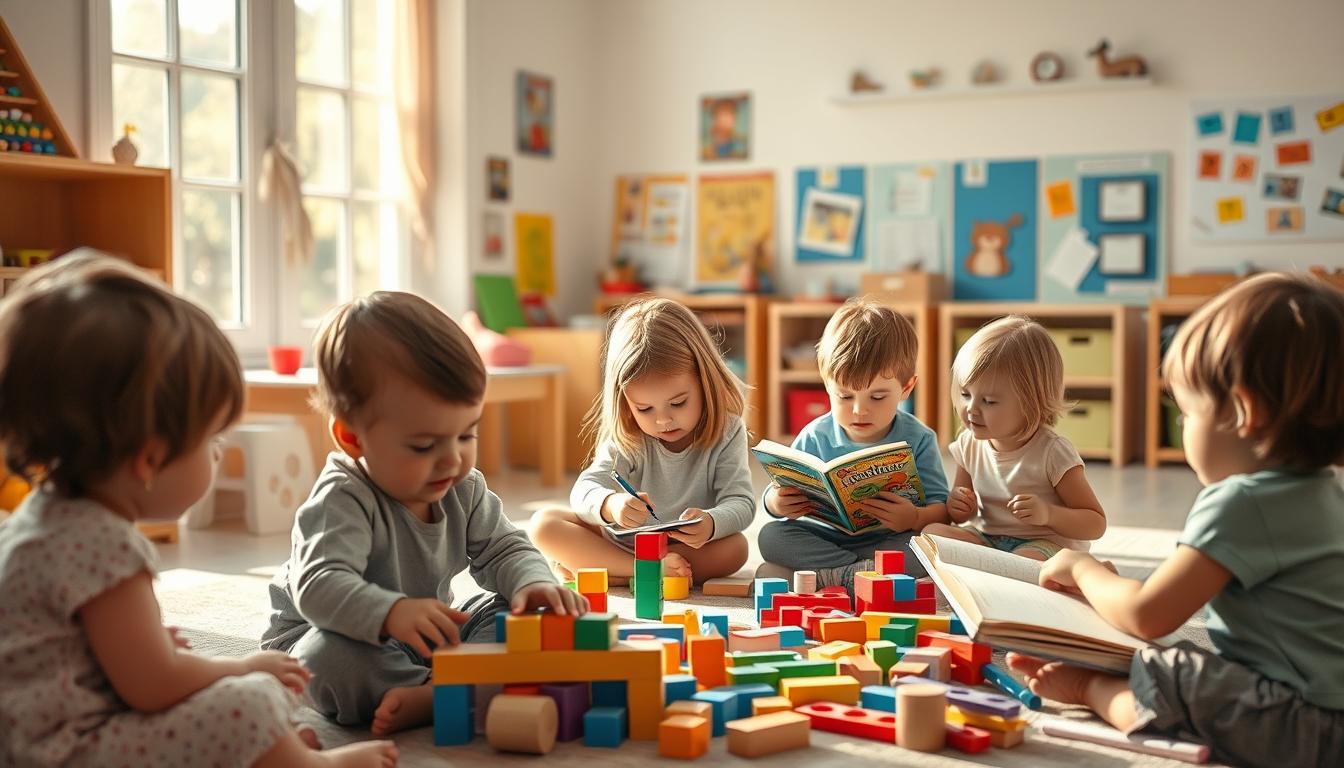
Childhood shapes who we become as adults. The first eight years, and the first three in particular, are key for brain growth. During this time, our brains make many connections that shape how we feel, decide, and stay healthy.
Over 11,750 kids are part of the ABCD study. It tracks how early life affects brain growth. Research shows that tough times in childhood can lead to mental and physical health problems.
Studies from the University of Rochester Medical Center show trauma in early years changes how we handle stress. This affects our mental and physical health. Even small changes in early years can have big effects later on.
Children who grow up in supportive environments do better in school and may even get advanced degrees. The science is clear: how we care for a child before age 8 sets the stage for their future.
Early childhood development is key for our emotional and physical health years later. Positive experiences, like feeling supported, help kids develop social skills and resilience. On the other hand, tough times in childhood can lead to problems in adulthood.
These findings show why the early years are so important. They shape our brain and habits for life. The experiences we have in childhood lay the foundation for who we become as adults.
Understanding Childhood Development
Childhood cognitive development is how kids learn and solve problems. Brain development in children in the first years is key. It shapes skills like memory and decision-making for life.
Experts say hitting early childhood milestones like walking and talking is important. These milestones predict better school and emotional health later.
By age 3, kids should speak fluently, and by 5, they should follow instructions well. These times are critical. A nurturing environment boosts childhood cognitive development.
Studies show kids who meet these milestones do better in school and avoid risky behaviors. They are 30% more likely to succeed.
Play and social interactions are vital. They help build important skills like sharing and focusing. These skills are linked to better job performance and relationships as adults.
Missing these milestones can lead to problems. For example, 40% of those who don’t meet them may face higher anxiety rates.
Parents and teachers can help by encouraging curiosity and providing stable routines. Simple actions like reading daily and praising efforts help. They build resilience in kids.
This foundation is key for handling stress and pursuing goals in the future.
Emotional Attachment in Childhood
Attachment theory shows how early relationships shape our lives. Secure attachment forms when caregivers meet a child’s needs warmly. This builds parent-child bonding. About 60% of people grow up with this style, leading to better emotional control and trust.
On the other hand, 40% face insecure styles like anxious or avoidant patterns. These often come from inconsistent caregiving.

Children without emotional security in childhood may find it hard to manage stress. Disrupted attachment can harm the brain’s stress system. This raises the risk of anxiety or depression later.
Securely attached kids explore with confidence. They know they have a safe caregiver. This foundation helps build strong relationships and self-esteem.
Research shows early bonds shape adult behavior. Insecure attachment might lead to seeking too much reassurance or avoiding closeness. But, understanding these patterns can help change for the better.
The first three years are key—attachment styles solidify by age three. They shape how we handle love, conflict, and intimacy as adults.
Healthy parent-child bonding lowers long-term risks like substance abuse or unstable relationships. By being responsive and empathetic, caregivers help build resilience. Recognizing how childhood bonds affect us today is the first step to stronger connections tomorrow.
Impact of Childhood Trauma
Experiencing abuse, neglect, or seeing violence as a child can have lasting effects. Research shows 64% of adults have at least one adverse childhood experience. This can lead to changes in how the brain handles stress and emotions.
For instance, neglect in childhood can increase the risk of depression, anxiety, and chronic pain later in life. This shows how early experiences can shape our future health.
Children who go through trauma may face mental health issues like PTSD or substance abuse. Their physical health can also suffer, leading to chronic illnesses. Studies show that trauma changes the brain’s fear and emotion centers, making mental health problems worse.
The cost of childhood trauma to society is huge. In the U.S., it costs over $103.8 billion each year. This includes healthcare and lost productivity. Using a trauma-informed approach in healthcare and education can help. It addresses the causes of trauma, not just the symptoms.
Early intervention can prevent long-term damage from childhood trauma. This is key to breaking the cycle of neglect.
Healing from childhood trauma is possible with therapy and support. Our brains can change and adapt to reduce trauma’s effects. Getting professional help is the first step towards healing and reclaiming well-being.
The Influence of Parenting Styles
Parenting styles greatly influence how children grow up. There are four main types: authoritarian, permissive, uninvolved, and authoritative. Authoritative parenting combines clear rules with empathy. This helps kids become confident and self-disciplined.
Authoritarian parenting focuses on control but lacks warmth. Kids raised this way often fear making mistakes and avoid taking the lead. This style is linked to higher anxiety and trouble trusting others.
Permissive parenting, where parents rarely set limits, can lead to entitlement and poor decision-making. Children may face obesity or dental problems due to unmonitored choices.
Uninvolved parenting makes kids feel neglected. Many develop low self-esteem or engage in risky behavior. On the other hand, authoritative parenting builds strong parent-child relationship bonds. These kids do well socially and academically, handling stress better. They’re also less likely to face mental health issues later.
Every parent’s approach has an impact. Understanding these effects of parenting styles helps adults reflect on their upbringing. For parents, choosing the right methods can nurture independence and emotional security. Small changes today can create a brighter future for the next generation.
Social Interactions and Peer Relationships
Childhood friendships shape how kids learn to interact with the world. Good friendships teach empathy and how to solve conflicts. They help kids learn to share and work together, influencing their personality.
Bullying has a big impact on kids. About 10% of children deal with constant bullying issues. This can lead to anxiety or social phobia if not handled.
A 15-year study followed 585 kids. It found that those with poor friendships had more internalizing problems by adolescence. Early social skills, like being liked by peers, predicted later friendship quality.
Peer relationships also affect long-term outcomes. Kids who feel secure in their friendships tend to have better adult relationships. Traits like being outgoing at age 12 can lead to stronger friendships as adults.
On the other hand, kids who are rejected might develop defensive social styles. This can impact their work or romantic relationships later. Today’s digital world adds new challenges to these age-old dynamics, making guidance even more important.
Educational Experiences and Learning
Early education does more than just improve grades. It shapes how kids see themselves as learners. Studies in educational psychology reveal that school experiences shape lifelong attitudes toward challenges and authority.
A supportive learning environment boosts a child’s confidence. On the other hand, toxic stress from adverse childhood experiences (ACEs) can harm their academic growth. Over 60% of U.S. adults have at least one ACE, with four or more ACEs leading to lasting focus and relationship issues.

“Gender roles heavily influence career choices, with Turkish studies showing school and family norms guiding professions like nursing for women or engineering for men.”
Schools are like social labs where kids learn to work together and understand hierarchies. Kids with ACEs may struggle more due to stress hormones affecting their focus. Programs like Second Step teach coping skills to help them.
Consistent social-emotional learning (SEL) can reduce mental health risks by up to 66%, says Kaiser Permanente. This shows the power of early education in shaping a child’s future.
Learning environment effects also show equity gaps. Kids from unstable homes might choose careers that don’t match their passions. But schools with SEL programs can help build resilience. Educators can change a child’s path with just one supportive interaction.
Cultural and Societal Influences
Cultural influences shape how kids see themselves and the world. In many places, toys take the place of real connections, leaving kids wanting more. A child’s early years soak up cultural values, from how they feel to what they value most.
In societies that value stuff over people, kids might think love is about objects. This can change how they see love and relationships.
Societal impact shows in daily choices, like what media we watch. Studies show violent content can make kids more aggressive. But shows like Sesame Street can help kids learn.
Communities with bad infrastructure face health risks, affecting kids’ well-being. These environments shape who kids become. For example, some cultures teach kids to rely on others, while others focus on personal success.
Community effects on personality are subtle but real. Teachers’ biases can affect how kids see themselves. Diversity in child development is key, as it helps kids adapt to different cultures.
This adaptability is important for navigating adult relationships later on. It shows that culture and society are more than just backgrounds. They actively shape who we are.
By understanding this, we can create environments where every child’s background is a strength, not a weakness.
Coping Mechanisms Developed in Childhood
Children often use childhood coping strategies to deal with stress. These adaptive behaviors help them survive. But, they can become habits in adulthood.
The Midlife Development in the United States study found that 25% of adults with high ACEs scores use these strategies. This affects their mental health and relationships.

Some common defense mechanisms are people-pleasing and being hyper-vigilant. These strategies might have helped in childhood. But, they can lead to burnout or strained relationships in adulthood.
Children who hide their feelings to protect others might struggle to express their needs as adults. This can affect their emotional regulation.
Research shows that adults with four or more ACEs face emotional regulation challenges twice as often. But, there is hope. Therapies like CBT can help change old patterns.
The childhood coping strategies we use aren’t flaws. They are survival skills. Recognizing their origins is the first step to finding healthier ways to cope.
How Childhood Experiences Shape Relationships
Our earliest interactions shape how we connect with others later in life. Childhood experiences greatly influence adult relationship patterns, focusing on attachment and relationships. Children who see constant conflict or neglect often carry these lessons into adulthood.
For example, those raised in unstable homes may develop trust issues origin from feeling unsafe. Over 60% of adults unknowingly mirror childhood attachment styles, whether secure, anxious, or avoidant.
Securely attached children grow up seeking closeness and balance. Those with insecure bonds might struggle. Anxious attachment can lead to clinginess or fear of abandonment, while avoidant types may shut down emotionally.
These behaviors come from how caregivers responded to their needs as kids. For example, children in high-conflict homes often learn to hide their feelings, impacting childhood impact on intimacy later. Over 40% of adults trace trust struggles to early experiences of betrayal or neglect.
Healing begins with awareness. Therapy, like EMDR or CBT, helps rewrite these patterns. Mindfulness practices and journaling can also improve emotional awareness. While past experiences matter, they don’t define forever.
Building new, healthy relationships as adults—even with conscious effort—can create secure bonds. Recognizing where these patterns come from is the first step toward change.
The Connection Between Childhood Habits and Adult Behavior
Childhood routines shape our adult lives. Habits formed early, like stress handling or daily tasks, influence our adult behaviors. For example, kids from chaotic homes might struggle with organization as adults.
Those taught to hide their feelings may find it hard to express them later. These habits start small but grow strong over time.

Our early environment shapes us. Parents who solve problems calmly raise kids who do the same. On the other hand, kids from conflict-filled homes may face similar issues in their relationships.
Childhood habits aren’t just actions; they’re about brain wiring. Neural pathways formed in youth become our adult defaults.
Research finds 25% of U.S. kids face trauma affecting their mental health. Routines like family meals or bedtime teach coping skills. A chaotic mealtime can lead to eating disorders later.
A child praised for perfection might develop unhealthy work habits. These early lessons become automatic through daily practice.
Self-awareness is key to change. Knowing how past routines influence us today can help us make new choices. Therapies like EMDR or CBT can help change ingrained patterns.
Small steps, like mindfulness or new routines, can build better habits. Understanding our origins is not about being stuck; it’s a path to growth.
Strategies for Healing and Growth
Adults dealing with childhood challenges can build resilience and make positive changes. Acknowledging the impact of childhood trauma is just the start. Evidence-based strategies help change patterns shaped by the past.
Healing childhood wounds takes patience and effort, but progress is possible. Therapy is key in recovery. Modalities like Cognitive Behavioral Therapy (CBT) and Eye Movement Desensitization and Reprocessing (EMDR) are effective.
Studies show CBT can cut PTSD symptoms by 70%. Trauma-informed therapists help process past pain safely. They help understand how early experiences affect current behaviors.
Daily practices build adult resilience. Mindfulness, exercise, and self-compassion improve emotional control. Research shows these activities boost emotional well-being by 40%.
Peer support groups offer community and support. They help reduce isolation and teach healthy coping skills. Healing isn’t always straightforward, but every small step counts.
The Substance Abuse and Mental Health Services Administration (SAMHSA) supports tailored interventions. By focusing on self-awareness and using evidence-based resources, adults can grow from past wounds. The journey may be long, but progress is possible at any age.
Understanding your story empowers you to choose a healthier future. This future is built on self-care, connection, and resilience.