












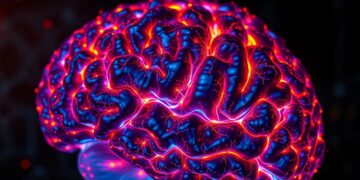















Every day, adults make over 35,000 decisions. These range from what to eat for breakfast to how to vote. Recent studies show a surprising fact: your brain might decide before you even know it.
Research from UNSW found that unconscious brain activity predicts choices before we’re aware of them. This finding challenges our belief in free will. It shows how unconscious decision-making plays a big role.
Psychologists like Daniel Kahneman, a Nobel Prize winner, have shown how biases affect our choices. The science of choice also looks at how emotions and physical signals influence our decisions. For example, people think a drink tastes better if they’re told it costs more.
This mix of logic and emotion makes decision science very interesting. It’s a field that’s always evolving.
Let’s dive into how our minds make these complex choices. We’ll see why some decisions come easily while others are hard. And we’ll learn what science says to make better choices.
Understanding Decision-Making: An Overview
Decision-making is about choosing the best option from what’s available. We make choices every day, from what to wear to where to work. These choices are influenced by our thoughts and feelings, both known and unknown.
There are two main ways we make decisions: fast and intuitive (System 1), and slow and careful (System 2). Researchers are also looking into System 3, which uses imagination to predict outcomes.
“Data gathering led to ‘not making decisions’ due to analysis paralysis,” revealed a Hewlett-Packard executive. This highlights risks of overcomplicating decision processes without timely action.
Structured decision-making leads to better results. McDonald’s trains managers at Hamburger University to follow clear steps. This ensures consistency worldwide. Yet, 70% of professionals skip these steps, leading to less than ideal outcomes.
Studies show that using a step-by-step approach can improve results by 50%. But only 30% of people review their past choices to learn from them.
Even small decisions can show big patterns. For example, 85% of business decisions don’t consider other options, increasing failure risks. Enron’s collapse, costing investors $60 billion, was due to poor decision-making.
Even with data overload, 65% of workers trust their instincts more than data. Finding a balance between fast and slow thinking can turn everyday decisions into strategic wins.
The Role of Psychology in Decision-Making
Psychological factors shape every choice we make, from what to eat to big career moves. Our brains use mental shortcuts called cognitive bias to make choices easier. For example, confirmation bias makes us ignore facts that go against our beliefs.
Anchoring bias focuses on the first piece of information we get. These biases help but can also cloud our judgment.
Emotions play a big part in our decisions too. Studies show 80% of our choices are based on feelings, not logic. The somatic marker hypothesis explains how emotions guide us, even in uncertain times.
Even simple choices, like buying a shirt, involve thinking about how it’ll make us feel. This is a key part of the psychology of choice.
Research at the University of Colorado found that a cluttered environment can actually improve our thinking. But too much data can lead to overthinking and poor choices. Decision fatigue kicks in after 20 daily decisions, making us more likely to make impulsive choices.
Mindfulness can help. Studies show it can increase rational choices by 50%.
The Neuroscience Behind Our Choices
Recent studies show a deep connection between the brain and decision-making. A groundbreaking experiment used fMRI scans to track participants’ choices. They found brain activity predicting choices 11 seconds before people knew they had decided.
This finding changes how we see the neuroscience of choice. It shows decisions start before we think we decide.
Key brain regions work together in neurological decision processes. The prefrontal cortex plans and evaluates options. The amygdala processes emotional responses.
The nucleus accumbens signals rewards, guiding preferences. Even the visual cortex influences how strongly we imagine choices. These interactions form the foundation of decision neuroscience, where brain waves reveal intentions before consciousness does.
Dopamine levels show why some choices feel “rewarding.” Sleep deprivation weakens these networks. Disorders like addiction show dysfunctions in these pathways, linking brain biology to mental health.
The study also hints at PTSD, where intrusive thoughts may stem from disrupted neural signaling during decision-making.
These findings don’t just map brain activity—they challenge how we view free will. The brain’s “pre-decision” signals suggest choices emerge from silent neural conversations long before we act. This knowledge could improve treatments for conditions tied to poor decision-making, merging science with real-world impact.
The Impact of Environment on Decision-Making
Our choices are influenced by our surroundings, often without us realizing it. A friend’s advice or peer pressure can have a big impact. Studies reveal that many people follow group opinions, even when they know it’s not right.
Social media ads, for example, can subtly change our preferences. This shows that contextual decision-making is rarely unbiased.

Physical settings also affect our decisions. Bright lights in stores make us choose quickly, while office layouts can influence negotiations. Professor Joel Pearson found that our brains hold onto thoughts, waiting for cues from our environment.
These environmental factors in decision-making often work without us even noticing. They guide our choices without our conscious intent.
In places like the Great Lakes, economic gains can lead to decisions that harm the environment. Short-term gains might seem appealing, but the long-term costs are often hidden. The “Hydropoly” game helps students understand how decision environment affects choices, balancing economic and ecological needs.
Research shows that smaller communities make more consistent decisions. But over time, these patterns fade. This shows how context can change our priorities.
By understanding how our surroundings and social signals influence our choices, we can make decisions that reflect our true values. Becoming aware of these influences is the first step to breaking free from unconscious biases.
Rational vs. Emotional Decision-Making
Do we use spreadsheets or our gut when making choices? The fight between rational decision-making and emotional choices affects every decision. For example, buying a house or saving money. Studies show only 5-10% of decisions are purely rational, as Baba Shiv’s wine experiment showed.
“The expression of emotions is as much a part of survival as reasoning.”
Neuroscientists talk about three decision systems. System 2 is for careful math, while System 3 imagines future outcomes. Doctors, for instance, use both data and empathy in their decisions. This balanced decision process helps avoid extremes.
Studies on brain-damaged patients show this balance. Those with certain brain injuries make risky financial choices, even knowing the risks. On the other hand, quick emotions like anxiety can affect how we see risks. Emotional intelligence helps manage these feelings.
Even the stock market is influenced by emotions. Stock prices go up on sunny days and down after soccer losses. This shows that decisions are better when logic and emotion work together. The trick is knowing when to think and when to trust your gut—without letting one rule the other.
The Role of Experience in Shaping Decisions
Every choice we make leaves a mark in our minds, shaping future decisions. Experiential decision-making uses decision history to guide us, often without us realizing it. For example, how we handled money as kids can influence our adult spending habits, even if our situations have changed.
“The brain favors options aligned with pre-existing activity, making past experiences a silent guide in our choices.”
Neuroscientists call these mental markers “somatic traces.” Professor Pearson explains that our brains prefer options that match our existing neural patterns. This helps us make quick decisions in familiar situations. But it can also keep us stuck in old ways of thinking.

Our past experiences and choices also affect how we feel. Studies show fear makes us cautious, while anger makes us more likely to take risks. These feelings come from memories of what felt safe or successful before. But sticking to old patterns can lead to trouble. The “what the hell” effect shows how relying too much on past choices can limit our ability to adapt.
Being aware of these influences starts with asking ourselves: Does this choice reflect learning from decisions, or am I just repeating old habits? By recognizing how decision history influences us, we can mix intuition with new ideas. This ensures our decisions stay in line with our current goals.
Decision-Making Models and Theories
Decision theory looks at how we choose between options. It uses models like System 1 (quick, emotional choices) and System 2 (slow, logical ones). Recently, System 3 was added, focusing on imagining future outcomes. These models help businesses use frameworks like the Vroom-Yetton model, which guides leadership with seven questions.
Many companies struggle with decision-making. Only 20% are good at it, surveys say. Tools like Edward de Bono’s Six Thinking Hats encourage different views, boosting creativity. Even quick choices can work if they meet basic needs.
For example, car buyers might use emotion, logic, and imagination to choose a car. Data shows 89% of managers sometimes use intuition, but 59% often do. Techniques like brainstorming and wildstorming help avoid biases.
By mixing decision theory with practical use, teams can avoid getting stuck. Effective business decision frameworks balance speed, creativity, and teamwork. This way, theory becomes action.
The Influence of Marketing on Our Choices
Marketing uses advertising psychology to get our attention. Think about buying a car. Ads make you imagine the seats and the envy of friends. They make you think about the cost too.
But too many choices can be bad. Research shows 24 jam flavors sold 6 times less than 6 options. 
Most of our decisions are made without thinking. 70% of our choices are made without realizing it. Packaging that looks good can influence 80% of buyers.
Even the time of day you send an email matters. HubSpot found that emails sent at 9 a.m. get more attention. But ethical marketing is about finding the right balance. It should help us make choices, not trick us.
Ethical marketing is a tough field. Some tactics, like targeting kids or using hidden data, are debated. Too many choices can make us buy things without thinking, cutting down quality by 40%.
Smart brands use three pricing tiers. The middle option often wins. Being aware of these tactics helps us make better choices.
Technology and Decision-Making
Technology guides millions of choices every day. It helps pick movies and makes decisions in hospitals. Apps like Google Maps use algorithms to simplify our lives.
Decision technology tools are great at handling data. For example, financial apps track spending to help with budgeting. In healthcare, predictive analytics diagnose conditions quickly. But, relying too much on technology can overwhelm us.
Technology can also create problems. Social media algorithms can lead to endless scrolling. Features like Instagram’s “close friends” try to balance privacy and connection. Some people, like Chris Atherton, avoid social media, while others, like Fabio Pereira, find it helpful for staying in touch with family.
“It’s a tool, not a replacement for real conversation,”
he adds.
Decision support systems need to be fast and clear. When AI suggests medical treatments or business strategies, we need to understand how it works. Tools like SIEM systems in cybersecurity can spot threats quickly. But, human oversight is key to avoiding biases or errors in algorithms.
Using decision technology wisely means knowing when to trust the data and when to think for ourselves. The right tools can simplify complex choices. But, the best decisions often come from combining human intuition with technology’s precision.
Common Pitfalls in Decision-Making
Decision-making errors often come from cognitive pitfalls like confirmation bias or analysis paralysis. These blind spots can trap even experienced leaders, leading to decisions that feel right but lack solid foundations. Recognizing how emotions or habits distort choices is key to avoiding bias.
Overthinking creates a positive feedback loop: dwelling on options makes bad ideas feel better. Data shows 52% of managers using trial-and-error find their first year stressful. Sunk cost fallacy—clinging to failing projects—exacerbates decision mistakes. Even high-performing teams need tools to stay objective.

Use structured tools to combat these traps. Decision matrices rank options against criteria like cost or impact. Seek diverse perspectives to challenge assumptions. Cooling-off periods reduce emotional bias. Toyota’s 5 Whys Technique digs deeper by asking “why” repeatedly to uncover root causes.
Psychological safety in teams boosts better decisions. KPIs must align with real goals—not vanity metrics like social media likes. Elon Musk uses First-Principles Thinking, breaking problems into core facts to innovate. The Eisenhower Matrix sorts tasks by urgency/importance, while the 10-10-10 Rule asks: How does this choice feel in 10 minutes, months, years?
Harvard research shows growth-mindset leaders solve problems 40% faster. Even small steps—like pausing before acting or tracking KPIs—reduce decision mistakes. Awareness of cognitive pitfalls turns stumbling blocks into learning tools. Start small: next time you face a choice, ask, “What data am I missing?”
The Future of Decision-Making
As future decision trends emerge, decision science will change how we make choices. It will mix human instinct with new tech like AI. This will open up new ways for AI and future choices.
Imagine AI helping with big decisions in healthcare and climate policy. It will also help us see what might happen before we act. This is important for dealing with the unknown.
Studies show how past events, like the pandemic, shape our decisions today and tomorrow. For example, during crises, we often rely on real data more than models. AI could soon help link our immediate choices to their long-term effects.
Researchers say we need to balance AI’s insights with our own judgment to avoid mistakes. They’re working to use data from many fields, like neuroscience and economics, to improve decision-making.
“The future belongs to those who prepare for it.”
As AI gets better, it will play a bigger role in our daily choices. It might predict risks or suggest the best options. But, we must ask: Will we keep making the big decisions, or will machines take over?
The answer is to work together with experts from different fields. By embracing new ways of making decisions, we can create systems that are fair and accurate.
Conclusion: Making Better Choices
Improving your decision-making starts with knowing how your mind works. Research from neuroscience and psychology shows biases like confirmation and anchoring affect up to 70% of our choices. Kahneman’s dual-process theory explains how our quick judgments and careful analysis shape our decisions.
Studies show 30% of people regret their decisions. But, using tools like pros-and-cons lists and pre-mortem analysis can help. These tools increase awareness and reduce regret.
Optimizing your choices means knowing when to trust your gut versus data. Keeping a journal helps spot patterns. Decision trees make complex problems easier to solve.
Gigerenzer’s “bounded rationality” suggests that sometimes, good enough is enough. Organizations that use analytics see better outcomes, up to 10%. This shows that improving your decision-making skills takes practice.
Professor Pearson’s research shows that unconscious processes influence our choices. But, we don’t have to follow them. By taking time to reflect, we gain control over our decisions.
Techniques like mindfulness and structured reflection reduce decision fatigue. This can improve quality by up to 20%. Combining emotional intelligence with critical thinking leads to better choices.
AI systems make things more efficient by 40%, but human skills are essential. Be curious about your thought processes. Every step toward making conscious decisions strengthens your ability to handle life’s choices.
With awareness, you can turn everyday decisions into chances for growth and purpose.