



























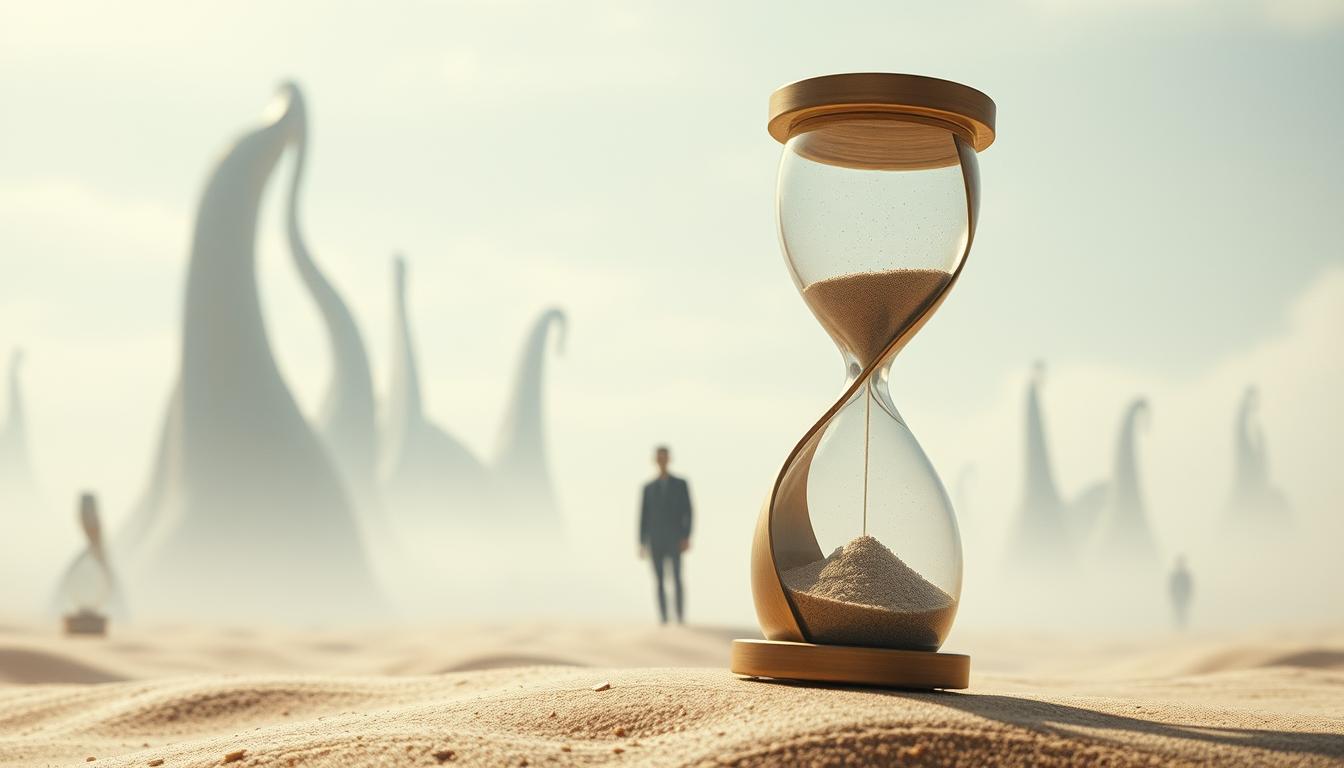
Have you ever wondered why childhood summers seemed to last forever, but now years zip by? Time perception with age changes a lot, changing how we see moments. A 5-year-old sees a year as 20% of their life. But at 50, that same year feels like only 2%, making time seem ten times faster.
University of Michigan professor Cindy Lustig explains, “
Why do years seem shorter as we get older? Kids have new experiences that make memories vivid, stretching time. Adults, on the other hand, have routines that blur days together, speeding up time.
Studies show that kids and teens between 10 and 25 notice time more because of brain changes. Adults often say three years feel like “yesterday” because they have fewer new experiences. This article looks into why aging affects time perception and what science says about slowing down time.
Understanding Time Perception in Different Ages
Our brains play a big role in how we see time passing. Kids and adults see time in different ways because of their age. For example, a week feels longer to a child than to an older person because it’s a bigger part of their life.
“Memory and perspective shape how we measure time,” explained Cindy Lustig, a University of Michigan psychologist. Her research shows how our view of time changes as we get older.
A 2007 study by Gil et al. looked at kids from 3 to 8 years old. It found that as they get older, they start to see time like adults do. Young kids use visual cues, while older ones rely on memory. This fits with the idea that our brains, memory, and choices all play a part in how we see time.
Studies show that how we see time changes with age. Young kids think videos are longer than they really are. But adults often think boring videos are longer. By age 10, kids start to see time like adults do, using gestures to measure time.
Our feelings also change how we see time. Angry faces make events seem longer than calm ones. This shows that our emotions can make time feel different. As we get older, life seems to speed up because we have fewer new experiences, making time feel shorter.
The Psychological Impact of Aging on Time
Memory and time perception are closely tied to how our brains process life’s moments. As we age, our attention span changes, making everyday routines feel rushed. Studies show older adults process information slower, leading to a sense that days fly by.
A study compared 121 younger and 74 older adults. It found older participants overestimated time intervals linked to emotional faces more than neutral ones.

Neural processing time declines with age, altering how we track time. Older adults showed slower responses in rhythm tasks, highlighting age-related declines in temporal processing. Dopamine, a brain chemical tied to pleasure, plays a role too.
New experiences, like vacations, can make time feel expansive. Routines, on the other hand, shrink that sense.
Loneliness amplifies aging psychological effects. Isolated older adults often report time dragging. Social engagement, like joining clubs or hobbies, can slow its passage.
The National Institute on Aging advises activities like walking groups or classes. These can boost social interaction, improving both mental health and time awareness.
Childhood memories feel vivid because developing brains absorb new information intensely. By age 60, each year feels shorter—just 2% of lived experience. To combat this, mixing familiar routines with novel activities helps balance memory and time perception.
This keeps life’s moments memorable and time’s flow intentional.
Childhood: A Slow Yet Fast-paced Experience
Do you remember waiting for summer vacation to end? Childhood time feels endless when we’re young. Days stretch like playdough, filled with new sights, sounds, and experiences. Yet, looking back, those years blend into a kaleidoscope of memories.
This mix comes from children’s sense of time being shaped by new encounters. Every school day, birthday party, or family trip makes a lasting impression. These moments slow down time but speed up in memory.
Scientists say young brains soak up new information like sponges. A child’s first day of school might feel like a week, even if it’s just six hours. Joy on a playground can make minutes feel like hours, while boredom in class makes time disappear.
Research shows kids aged 4-5 think action-packed scenes last longer than adults. This shows how their brains focus on new things.
Early years are a feast for the senses. A walk to the park is a hunt for smells, textures, and sounds. But as we grow older, routines replace exploration. The same park trip as an adult might go unnoticed.
This change explains why childhood summers seem endless yet disappear in memory. By enjoying life’s small wonders, we can recapture that sense of time. Moments linger, and memories form vividly.
Adolescence: A Turning Point for Time Perception
Adolescence changes how young people see time, mixing teenage time perception with the need to find their identity. Teens often feel time slow down during big moments like first dates or exams. But, they feel like time flies by during everyday school days.
This adolescent temporal experience shows how their brains are learning to plan for the future and enjoy the present.

The part of the brain that helps with making decisions, the frontal cortex, doesn’t fully grow until the mid-20s. This is why teens often choose immediate rewards over long-term goals. Puberty’s timing also affects how they see time.
For example, girls who start puberty early might feel older than their peers. This can change how they see time passing.
“Early puberty can trigger a ‘time mismatch’ where bodies mature faster than emotional readiness,” noted Belsky’s 1991 theory on adaptive responses to stress. This aligns with findings linking adverse childhood experiences to accelerated physical development and altered time awareness.
Parents might see teens wanting to grow up fast but also wanting to hold onto childhood. This is because they are figuring out who they are. They are trying to balance their current life with their future goals.
Social media makes this struggle worse. It can make some moments feel like they last forever, while others seem to disappear quickly.
Understanding these changes can help adults connect better with teens. Teens aren’t just distracted. Their brains and social worlds really see time differently. Helping them understand their changing view of time starts with patience and talking openly about their experiences.
Adulthood: The Speeding up of Time
Adulthood time acceleration often starts quietly. By midlife, many adults notice years passing like minutes. Routine time perception shifts as daily habits repeat endlessly. Work routine time effects turn Monday mornings into Friday afternoons in a haze.
The brain’s automatic pilot mode kicks in, storing fewer new memories. Without fresh experiences, adult life temporal experience becomes a blur of sameness.
Science confirms this pattern. A 2005 study tracked 499 participants, finding adults over 40 perceived time accelerating sharply after childhood. Neuroscientists note neural processing slows with age—fewer mental snapshots per second mean less data to “stretch” time.
Imagine a 30-year-old’s workweek blending into weekends, while a child’s summer vacation feels endless. The brain’s “holiday paradox” explains why predictable days vanish faster than adventures.
Work routines worsen the effect. Repetitive tasks trigger automatic processing, leaving fewer memories to anchor time’s flow. A 2023 study in Nature Scientific Reports showed adults perceive uneventful hours as longer in the moment but shorter in memory.
The key? Intentional novelty. Adding new hobbies or mindful pauses tricks the brain into storing more “time markers.”
“Time stretches when we engage fully with life,” says neuroscientist Dr. Mara Lenz. “Mindfulness exercises reset the brain’s clock.”
Breaking routines—like taking a different route to work—creates mental landmarks. These small changes counteract work routine time effects and slow perceived acceleration. The goal isn’t to stop time, but to reclaim moments before they vanish into the blur.
The Golden Years: Changes in Time Perspective
As adults enter later life, their elderly time perception is quite different. Days may feel slow, but years seem to go by quickly. This is because they have fewer new experiences to remember.
Dr. Adam Lustig explains, “Without vivid memories, time seems to rush when looking back.”
“When you’re looking back, the less rich your representation is, the more it’s going to seem like the time went by quickly,” said Dr. Lustig.

Retirement brings a change in how time feels. Without work’s daily pace, time moves differently. Research shows the brain handles new information slower, making minutes feel longer.
Bejan’s 2019 study found that fewer mental images shape this change. Yet, seniors learn to find joy in quiet moments.
Older adults’ aging time perspective teaches them to value each day. Studies show their mental processing slows, but many find new ways to enjoy life. Mindfulness and small pleasures help them stay present.
This journey turns years into a chance to reflect and grow. Every hour becomes precious.
Cultural Influences on Time Perception
How we see time changes a lot from one culture to another. Some see time as a straight line to goals, while others view it as a circle, connected to seasons or traditions. These views influence how we celebrate important days like birthdays or holidays.
For example, Ramadan’s daily fasting shows how rituals bring people together across cultures. Even within families, time is shaped by things like holidays or work schedules. These define our daily routines.
Studies reveal that time feels different based on where you live. A study on Ramadan found similar ways people track time, no matter their culture. Fast-paced societies value quick decisions, while slower ones focus on seasonal cycles.
Technology also changes how we see time. Digital calendars and global communication mix old and new time practices. This creates new rhythms that blend different cultures.
How we age is also influenced by culture. In some places, elders are seen as keepers of history, while others value youth and new ideas. These views change how we measure life’s journey. For example, Japanese ma—a mix of space and time—shows how language reflects cultural views of time.
When you plan a family event or check a calendar, think about your culture’s view of time. Our clocks may tick the same, but their meaning varies greatly. It’s all about the world we live in.
Strategies to Enhance Time Awareness
Slowing down time starts with mindfulness. Simple practices like meditation help the brain stay present. Studies show it boosts gray matter in areas linked to memory and emotion, making moments feel more vivid.
A Harvard program found brain changes in just eight weeks of daily practice.

Trying new things can also stretch time. Travel, learning new skills, or changing routines create new neural pathways. For example, taking a different route to work makes the brain enjoy details more.
Research from Avni-Babad and Ritov shows new tasks feel longer in memory because they require more attention.
“Mindfulness makes moments seem longer,” explains Dr. Lustig, highlighting how focused engagement expands subjective time.
Improving time consciousness starts with small changes. Journaling boosts memory and mindfulness, helping track daily highlights. Brief pauses to notice sensory details, like the taste of coffee or the sound of rain, can deepen time awareness.
These strategies don’t stop time but make it richer. They transform routine into something memorable.
The Science of Time and Aging
Research into time perception shows how our brains shape our lives. As we get older, our brains change how they handle new things. This affects how we see time.
Children’s brains soak up new sights and sounds all the time. This makes their early years feel longer. Adults, on the other hand, see time passing faster because they don’t experience as many new things.
“The brain receives fewer images than it was trained to receive when young,” explains researcher Bejan, highlighting brain aging time awareness effects. This sensory reduction speeds up subjective time.
Our metabolism and brain activity also influence how we see time. Younger brains work faster, making moments feel more vivid. As we age, our brains slow down, making time seem to pass quicker.
Studies link dopamine levels to how we perceive time. New experiences boost dopamine, making moments feel longer. This is why we often feel like time flies when we’re doing something we love.
The hippocampus and prefrontal cortex work together to track time. “Time cells” in the hippocampus fire for different durations. The prefrontal cortex compares past and present. As we age, these systems can weaken, changing how we see time.
Dopamine changes also affect how we experience time. This is why routines feel short, but vacations or hobbies make time seem to slow down.
Understanding these mechanisms offers hope. Doing new things can trick our brains into feeling like time is stretching. This science shows us that time isn’t fixed. It’s a flexible, biological story shaped by our brains and choices.
Conclusion: Embracing Time Through the Ages
Studies show our view of time changes as we get older. A study with 233 people found older adults (50-89) see time passing 24.6% slower than the young. This shows how our brains adjust to life’s pace. Dr. Lustig says, “We control how we experience time,” encouraging us to live on purpose.
Starting time mindfulness early is key. Our memories are sharp in early adulthood but fade as we settle into routines. Yet, we don’t have to feel rushed. New experiences, like learning or traveling, slow down time.
Science is working to make us live longer and better. Ideas like the “longevity escape velocity” suggest a future where 100-year-olds are healthy. But, it’s important to enjoy time now, too.
Set goals that fit your age. Younger people might seek new experiences, while older ones enjoy deepening relationships. Activities that mean something to us build our brains and make life richer.
Time is what we make of it. By being mindful or rethinking life stages, we can cherish every moment. As years go by, our choices today shape the life we remember fondly.