



























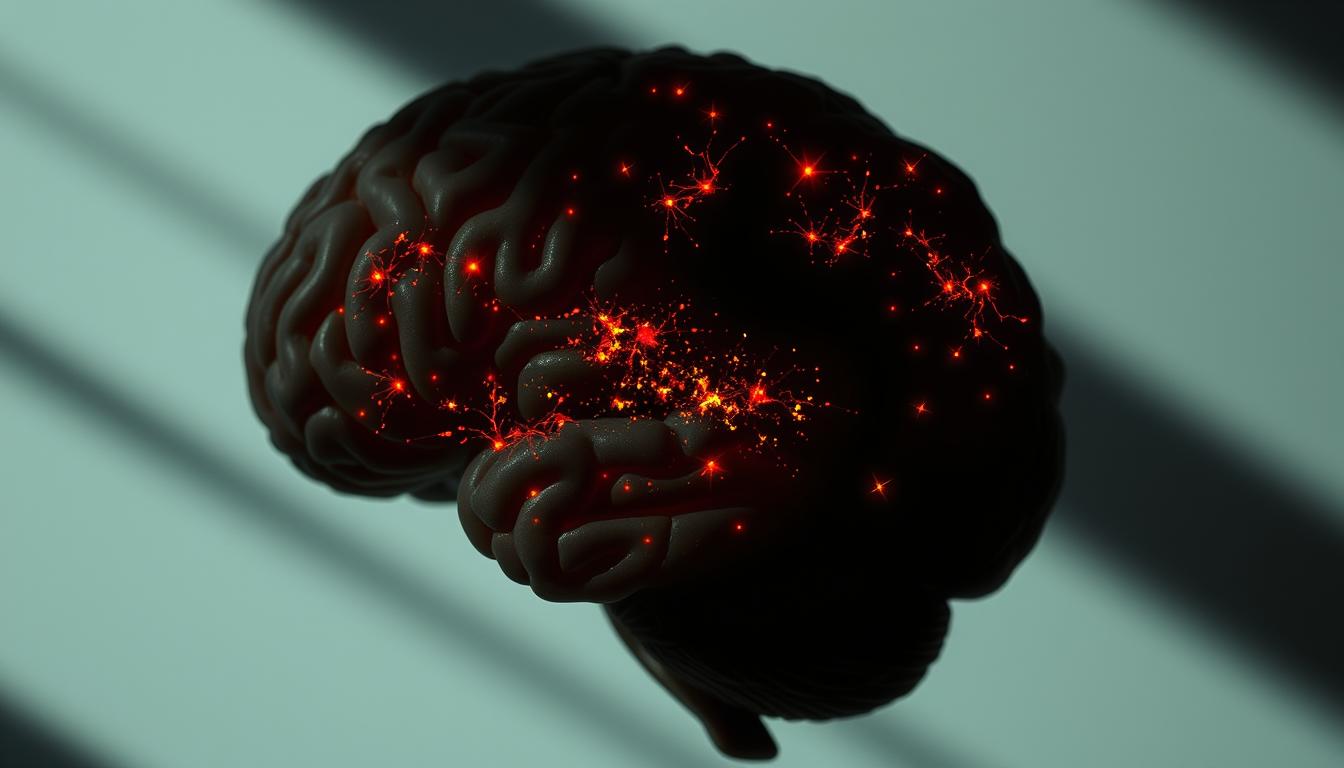
Our minds often resist difficult truths because of cognitive dissonance. This is the discomfort we feel when our beliefs clash. When we face facts that go against our views, we feel psychological discomfort. This makes us try to ignore or twist the information to keep our self-image intact.
A 1975 Stanford study showed this clearly. Students judged suicide notes but skewed results based on their confidence. Those who thought they did well overestimated accuracy, while others doubted themselves unjustly. This reveals how mental resistance shields us from admitting mistakes.
Even when given false data about firefighters’ risk-taking, participants clung to biased conclusions. After learning the info was fake, many refused to revise their views. This conflicting beliefs pattern repeats in debates about topics like capital punishment, where supporters and opponents pick data aligning with their stance, deepening divisions.
Science explains why this happens. Dopamine spikes when we encounter confirming evidence, reinforcing biases. Stress hormones like cortisol make us cling to familiar ideas during disagreements. These mechanisms show how our brains prioritize comfort over truth, making difficult truths hard to accept.
The Nature of Cognitive Dissonance
At the heart of this mental struggle lies internal inconsistency. This is when our actions don’t match our contradictory beliefs. Leon Festinger, the psychologist who coined the term, said it’s like hunger. He compared it to a primal drive that pushes us to fix the conflict.
In his 1957 work, he wrote, “Cognitive dissonance leads to activity oriented toward dissonance reduction just as hunger leads to hunger-reduction.” This shows its strong motivating power.
Think about valuing health but working a job that’s not active. This creates psychological tension. Festinger’s 1959 experiment showed this clearly: people paid $1 to lie about a boring task said it was more enjoyable than those paid $20. The smaller reward made them justify their actions, easing the discomfort.
Such contradictory beliefs can make us rationalize our choices, ignore facts, or even change how we see ourselves.
Whether it’s defending a habit despite health risks or sticking to outdated views, our minds push for consistency. Festinger’s theory tells us this tension isn’t just discomfort. It’s a call to find balance between who we are and what we do.
The Psychological Mechanisms at Play
Our brains employ defense mechanisms to handle conflicting thoughts. When faced with facts that clash with beliefs, people might rationalize choices or avoid uncomfortable truths. Though these tactics ease immediate stress, they often lead to psychological distress as unresolved tension builds over time.

Ignoring reality can create cycles of doubt. For example, dismissing evidence to protect self-esteem may ease short-term anxiety but worsen long-term well-being. Studies show that clinging to familiar beliefs—even when wrong—can heighten stress as dissonance grows.
“Denial feels easier than truth, but it never truly resolves the problem.”
These patterns show how mental habits shape our responses to conflict. Being aware of these mechanisms is key to breaking unhelpful patterns and fostering healthier decision-making.
The Impact of Upbringing and Culture
Our early years shape our worldview. Family influence is key in belief formation, as kids learn values from caregivers. Social conditioning through family teaches us what to accept and question.
Households that encourage open dialogue might foster critical thinking. Others might discourage doubt. This early training affects how we handle conflicting information later.
Cultural beliefs guide our responses to challenging ideas. Societal norms often reward conformity and penalize dissent. For example, a Northwestern University study found people who feel uncertain about their views work harder to defend them publicly.
This shows how cultural expectations can lock us into certain perspectives, even when evidence contradicts them. Political divides further highlight this: Yale research shows only 23% of hierarchical individualists accepted climate science when framed as human-caused, versus 88% of egalitarian communitarians.
These patterns show how upbringing and culture intertwine. Family dynamics around questioning authority shape our comfort with uncertainty. Cultural frameworks like media consumption also play a role.
For example, Fox News viewers are more likely to believe the Ground Zero mosque myth. Recognizing these roots doesn’t assign blame but invites self-reflection. By understanding how social conditioning and cultural beliefs shape our mental frameworks, we can begin to untangle inherited assumptions from personal truth-seeking.
The Role of Confirmation Bias
Confirmation bias makes us seek out information that matches our beliefs. This was first shown by cognitive psychologist Peter Wason in the 1960s. He found that people tend to selective exposure to data that confirms their views.
Today, technology makes this even worse. Algorithms show us content that fits our preferences, trapping us in filter bubbles. This limits our exposure to different viewpoints.

When faced with opposing evidence, we tend to ignore it. Studies show 70% of people focus on confirming their beliefs, not listening to opposing views. This mental shortcut might feel comforting but narrows our perspectives.
For example, during elections, voters might overlook a candidate’s flaws. This can skew their decisions. Even our memories can be influenced, making us remember facts in a way that supports our beliefs.
But, being aware of confirmation bias can change our behavior. A North American insurer increased its revenue by $30 million by using behavioral science to fight biased decision-making. Recognizing confirmation bias is the first step to clearer thinking.
By questioning sources, diversifying our news intake, and acknowledging our blind spots, we can break the cycle of self-reinforcing beliefs.
Difficult Truths in Personal Relationships
Relationship conflicts often come from beliefs not matching actions. For example, someone might say they value equality but expect their partner to do most of the chores. This interpersonal dissonance leads to tension because actions don’t align with values. Emotional avoidance—ignoring these mismatches—can keep couples stuck in cycles of unspoken resentment.
Studies show 70% of people hide flaws from their loved ones. Yet, 85% agree that honesty is key to real connections.
Childhood attachment patterns often shape these dynamics. Many repeat old behaviors without seeing how they affect current relationships. For instance, 65% of people try to “fix” their partners instead of accepting them.
This denial stops growth, as unresolved issues build up. Emotional avoidance weakens trust, making conflicts even harder to solve.
Breaking this cycle begins with taking responsibility. Using “I” statements can reduce defensiveness by 40%, research finds. Taking ownership of actions can increase relationship satisfaction by 50%.
Healthy communication means facing discomfort directly, not hiding behind blame. By facing tough truths, couples can build intimacy based on mutual understanding, not avoidance.
The Influence of Societal Norms
Social conformity and groupthink often take over our judgment. When facts contradict our beliefs, we often ignore them. This is because we value belonging over truth.
Think about how old norms like segregation or believing the Earth is flat lasted. People stayed silent to avoid being different.

Communities can be harsh to those who don’t fit in. Studies show 80% of people change their answers to match others, even if they’re wrong (Bicchieri, 2016). In one study, landlords thought 50% of their peers wouldn’t rent to unmarried couples, but in reality, all were okay with it.
This shows how ignorance can keep bad norms alive. It stops us from moving forward.
But, change is possible when norms shift. Movements like civil rights showed us that questioning norms can lead to progress. Today, we see fewer people smoking in public as attitudes change.
Breaking free from social pressure starts with understanding how norms influence us. It’s about choosing to think for ourselves, even when it’s hard.
The Costs of Ignoring Truths
Ignoring uncomfortable truths starts small. It might be ignoring a health warning or dismissing feedback. But over time, these choices harm psychological growth. People who deny reality risk stagnation in adapting and growing.
For example, smokers who ignore health risks to keep smoking face regret. Psychologist Leon Festinger’s work shows denial shapes behaviors, not just personal choices.
On a bigger scale, consequences of denial grow. Political divisions, like the record polarization in Congress, show how truth avoidance causes gridlock. Climate change debates are similar, with delayed action causing more harm.
Research shows education doesn’t always bridge political gaps. Democrats and Republicans see climate data differently, showing beliefs can override facts.
“What you resist not only persists, but will grow in size,” Carl Jung’s wisdom highlights how denial escalates problems. Avoiding issues doesn’t make them disappear; it lets them worsen.
Ignoring truths is like a dam breaking slowly. Unaddressed emotions harm relationships, careers, and health. Ignoring reality leads to avoidable struggles. But facing facts can lead to resilience and progress.
Learning to Embrace Difficult Truths
Starting to accept hard truths is a small step. Psychological resilience grows when we choose curiosity over resistance. Studies show 75% of people believe facing discomfort helps us grow, but many find it hard to begin.
Begin by accepting your feelings without judging them. This can cut down anxiety by 25%, as research on stress management shows.

Adopting intellectual humility lets us update our old beliefs. Ask yourself, “What if I’m missing something?” instead of sticking to outdated views. This mindset is in line with a growth mindset, where challenges are seen as chances, not threats.
Mindfulness, used by 30% of people, helps keep self-worth separate from temporary failures.
Building adaptive thinking means asking yourself, “What’s one new perspective?” every day. Review your core values weekly to make sure your actions match your principles. This can reduce resentment by 50%, as studies have shown.
While change is tough, 25% of those who practice report better emotional control in just months.
Start small: Listen to a viewpoint you disagree with. Notice how your body reacts. Over time, these exercises strengthen neural pathways for seeking truth. Remember, every step toward honesty builds a foundation for lasting psychological flexibility.
The Role of Mindfulness
Mindfulness is a practical way to deal with hard truths. It helps us notice our body’s tension or our mind’s resistance early on. This skill lets us see the first signs of trouble without denying it.
The RAIN technique, made by Michele McDonald, teaches us to recognize, allow, and investigate discomfort without judgment. It helps us manage our emotions better. Programs like Jon Kabat-Zinn’s MBSR at the University of Massachusetts Medical School show its benefits.
Mindful acceptance is about accepting reality, not forcing beliefs. Studies show that short mindfulness practices can lower stress. By being present, we move from automatic defenses to thoughtful responses. This doesn’t make discomfort go away but helps us face challenges with curiosity, not fear.
Seeking Support from Others
When we face tough truths, social support helps us find our way. Cognitive behavioral therapists use the cognitive triangle to show how others can help us see things differently. But many are afraid to ask for help.
Research shows people often think others will say no more than they actually do. In fact, 70% of people agree to help, but those asking think only 50% will. This shows we should ask for help more often.
Getting feedback from people we trust can open our eyes to things we miss. A Stanford study found kids as young as seven worry about looking weak if they ask for help. But thinking about others’ views can make us less afraid.
For example, asking clearly and directly can increase the chance of getting help by 30%. Zhao’s research says being open about needing help builds trust.
“Collaborative learning environments foster growth,” say experts. When groups feel safe, constructive feedback helps everyone grow, not just criticize.
Working together in groups, like therapy circles or study teams, makes challenges easier to handle. Over 60% of people who ask for help say they feel clearer in their minds. This shows asking for help makes us stronger, not weaker.
So, what’s the next step? Start small. Ask a friend for their opinion, join a support group, or try giving feedback first. Truth grows in open spaces.
Education and Awareness
Education helps us deal with cognitive dissonance by teaching critical analysis and logical reasoning. Schools and communities can teach us to question our assumptions. For instance, Maranda Dynda might have made different choices if she knew how to spot misinformation.
Research shows that abstract instruction can improve learning. Biederman and Shiffrar’s study (1987) found that brief training in information literacy can enhance decision-making. Today, education should focus on teaching how to analyze claims, not just memorize facts.
Practical steps include asking: “What evidence supports this claim?” and “Does the source have bias?” Classes on logical reasoning help us spot fallacies. For example, assuming vaccines are unsafe because a neighbor says so ignores scientific data. Schools can use real-life scenarios to practice these skills.
Programs like the National Research Council’s framework encourage learners to connect ideas across subjects. This fosters flexible thinking. Thorndike’s early work on knowledge transfer shows that structured learning reduces emotional reactions. Awareness begins with understanding that curiosity, not certainty, is key to growth.
Final Thoughts on Cognitive Dissonance
Facing hard truths is tough, but it leads to personal growth. When our actions and beliefs don’t match, the discomfort we feel is a sign of growth. Research shows 88% of employees want honest feedback, but only 24% get it. This shows how often we shy away from tough talks.
This avoidance isn’t just in work settings—it’s a human trait. But, learning to tolerate discomfort can turn this tension into progress. Leaders who encourage feedback see a 62% increase in employee advocacy. This shows that integrating our thoughts and actions can shape our workplaces.
Tools like Neurotech® and Implicit Reaction Time (IRT) methods help find hidden dissonance. By addressing these gaps, companies create spaces where employees can be their true selves. This isn’t just an ideal—it’s a reality.
Leon Festinger’s theory tells us that dissonance pushes us to change. When we face contradictions, we must choose between staying the same or growing. A 2019 study on eating disorders showed that dissonance can lead to behavioral changes, even in complex situations.
While facing discomfort is hard, it builds resilience. Every step toward honesty strengthens our self-awareness and trust in others. Authentic living begins with small choices like admitting mistakes and seeking feedback.
Organizations using IRT data can find where employees feel most out of sync. This turns discomfort into change. This process may take time, but it’s worth it. By embracing dissonance, we don’t just survive life’s challenges—we grow through them. The journey to truth may not be easy, but it’s where true transformation starts.