




















Humans have always been drawn to the outdoors. But today, we spend 25% less time outside than we did 20 years ago. This change affects our well-being. Researcher Netta Weinstein says, “Our environment influences us in ways we don’t realize.” The natural world offers a way to heal our souls with its calming sights and sounds.
Nature therapy is more than a trend; it’s essential. Walking in forests can improve memory by 20%. It also makes us better at solving problems, by half, when we’re not staring at screens. Our bodies also benefit: stress hormones decrease, our heart rate slows, and our immune system gets stronger. These benefits show why spending time outside is so important.
Science backs up what our ancestors knew: spending 120 minutes a week in green spaces makes us healthier and happier. As cities expand and research grows—from 60 studies in 2005 to 1,000 today—the need to reconnect with nature grows. Your soul needs this connection. Let’s see how nature can help fix what indoor life takes away.
The Connection Between Nature and Mental Health
Science shows nature mental health benefits are real. Over 70% of UK adults say being near nature makes them feel better. Also, 44% say they worry less when in nature. This proves that nature can be a kind of outdoor therapy, helping to reduce stress and improve mood.

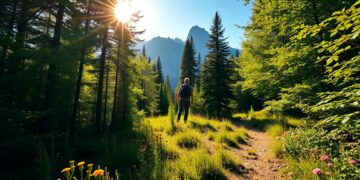
Walking in forests or parks can help our minds. A study found that memory tests improved by 20% after walking in arboretums. Even just looking at trees can help us focus better. This supports green space psychology, showing how nature can reduce mental tiredness.
Nature also helps with anxiety. Studies show that forest bathing lowers stress hormones, and walking in green spaces reduces worries. For example, a 50-minute walk in nature can reduce anxiety more than walking in cities. This shows that nature for anxiety is a useful way to find mental balance.
Research also shows that kids in greener areas have fewer behavioral problems. Adults living near parks are happier too. Whether it’s hiking, gardening, or just sitting under a tree, nature offers a free way to refresh our minds.
The Physical Benefits of Being Outdoors
Nature is not just good for our souls; it’s also great for our bodies. Being outdoors boosts our immune system thanks to the compounds trees release. These compounds help our bodies fight off sickness.
Being in nature also means cleaner air. This cleaner air is better for our lungs. A study showed women living near parks had a 34% lower risk of dying from lung problems over eight years.
Even a short walk outside can make us feel more alive. Just five minutes in a park can give us a boost. Sunlight also helps our bodies make vitamin D, which is good for our bones and immune system.

Outdoor exercise is better than working out inside. It feels easier but burns more calories. Just 15 minutes of sunlight a day helps keep our vitamin D levels up, which is good for our heart and immune system.
Children who play outside less often use screens. This means they are more active and focused. Harvard researchers found that green spaces are linked to lower death rates, showing how important nature is for our health.
Walking in parks or forests can lower blood pressure and stress. Forest bathing, or shinrin-yoku, can even improve sleep and energy. Every step outside is a step towards a healthier body. So, take time to breathe in that fresh air and feel the benefits.
Nature as a Source of Inspiration
Nature and creativity go hand in hand. Outdoor spaces are full of inspiration, where ideas can freely flow. Studies show that being outdoors improves problem-solving skills.
Students who spent four days in nature did 50% better on tests. This shows the power of nature in sparking creativity.
“Our results demonstrate that there is a cognitive advantage to be realized if we spend time immersed in a natural setting.”
Being away from screens helps our brains relax. Trees, rivers, and the sky give us new views. Artists and inventors have always found inspiration in nature.
Today, innovators also seek out forests and parks for ideas. Even a short walk can clear your mind and help solve tough problems.

Now, companies create outdoor spaces for brainstorming. They see how nature’s patterns inspire new designs and tech. For a daily boost, try walking during lunch or sketching in a park.
Engaging with nature’s textures, colors, and sounds prepares our minds for creativity. Nature is more than a setting; it’s a spark for imagination and innovation.
The Importance of Natural Light
Natural light is more than just a nice addition to your day. It’s essential for your health. Being in sunlight helps control your circadian rhythm nature, which is your body’s internal clock. This clock tells you when to sleep and wake.
Direct sunlight is much brighter than the lights in offices. This makes it key for keeping your body’s systems in sync. Being in sunlight can also make you feel happier and more energetic.

Being outside helps your skin make vitamin D outdoors. Vitamin D is important for strong bones and a healthy immune system. Not having enough vitamin D can make you tired and weak.
Morning sunlight helps your body make serotonin, a hormone that makes you feel good. Evening light helps your brain get ready for sleep. This is called sunlight sleep regulation.
Research shows that people who don’t get enough natural light sleep and feel worse. A study found that those who spent 2.5 hours outside each day felt less depressed. Every extra hour outside can lower the risk of long-term depression.
It’s clear that sunlight is good for your mind. It’s not just about avoiding darkness. It’s about seeking daylight to feel better physically and emotionally.
Start small: open windows, take breaks outside, or walk to work. Even 20 minutes of sunlight a day can help you sleep better and feel more alive. Your body does best when it’s in sync with the sun’s rhythms.
Social Well-Being and Outdoor Activities
Nature brings people together by turning trails and parks into places for bonding. Activities like kayaking and tree-planting help build community through teamwork. These settings make it easier to form connections that are hard to find indoors.
“Nature’s quiet spaces let people drop their guards and truly listen.”
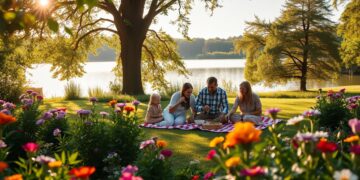
Research shows 43% of social health outcomes improve with outdoor activities. Neighborhood cleanups and walks between generations are great examples. Families and friends who spend time outdoors together strengthen their bonds, with 92% of studies showing mental health benefits.
Even casual meetups at parks can help strangers become friends. These activities bridge age and cultural gaps. Communities grow stronger when people work together on outdoor projects.
Start small by joining a local trail group or hosting a backyard campfire. Nature’s simplicity helps people connect on a deeper level. The outcome? Stronger communities, deeper bonds, and friendships that grow like roots in fertile soil.
Mindfulness and Nature
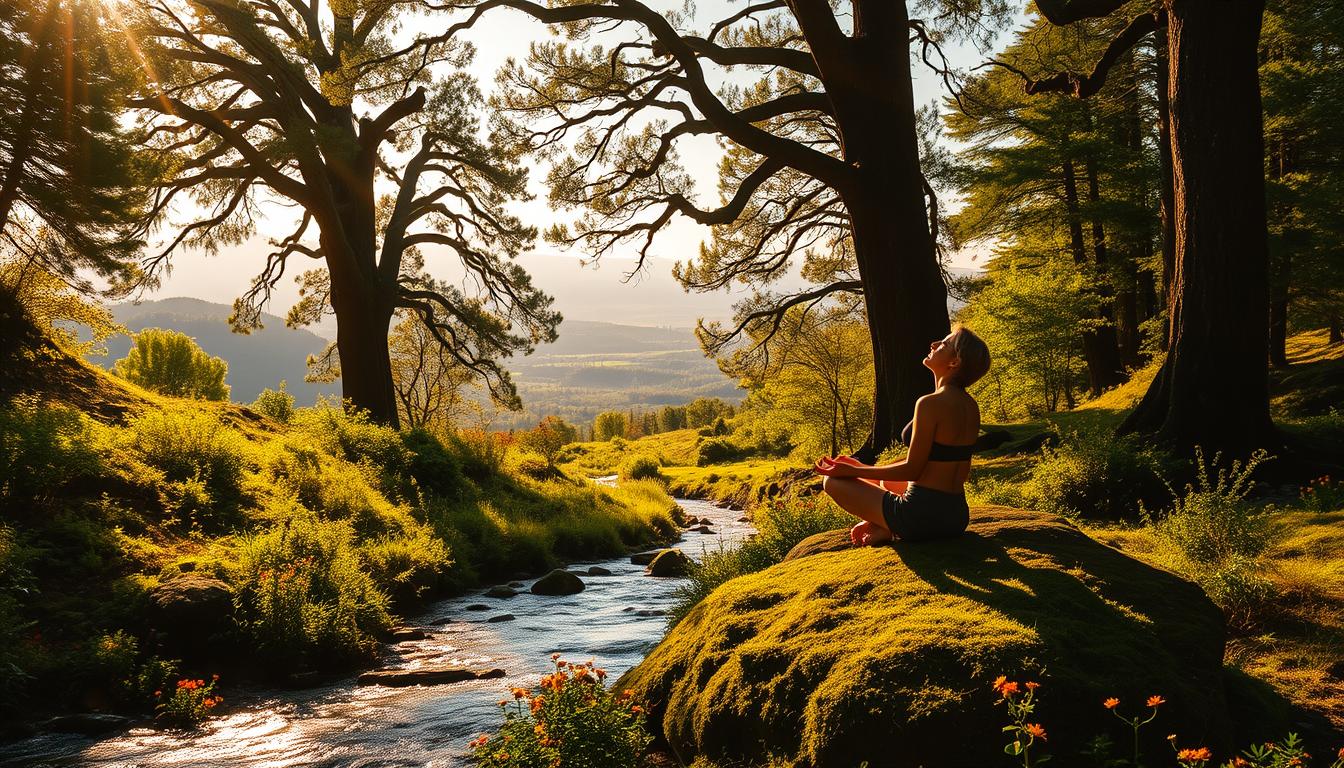
Nature is perfect for nature mindfulness practices. It offers a calm space where you can focus on the present moment outdoors. Sounds like rustling leaves or a distant brook help you stay present. This gentle focus calms the mind.
Research shows that short outdoor meditation sessions can lower stress and improve focus. This is more effective than meditating indoors.
Experiencing sensory awareness nature—like feeling grass or smelling pine—deepens your mindful nature connection. Studies by Apsy and Proeve (2017), 2016) found that people felt more grounded and less stressed after being outdoors. Even a five-minute walk noticing your surroundings can refresh your mind.
Try simple steps: Sit quietly and name three things you see, hear, or feel. This builds mental strength. Forest bathing or mindful walking aligns with Attention Restoration Theory. These habits reduce worries and improve emotional balance over time.
Start with what’s nearby—your backyard or a local park. Let nature’s rhythms guide you. You don’t need to be an expert—just curious. As Mutz and Müller (2016) noted, even short outdoor mindfulness sessions can boost happiness and lower stress. Begin small and let the outdoors calm your mind.
Engaging with Wildlife for Better Health
Watching wildlife has wildlife health benefits that are more than just a casual stroll. Over 40% of Americans now see nature as key for their well-being. The RSPB has seen a 69% increase in people seeking wild spaces during tough times.
This nature wildlife connection taps into our deep desire to connect with life. Even short moments, like watching birds, can lower stress. Activities like fly fishing or birding combine focus and relaxation, helping us find a calm state.
Even city folks can enjoy these biodiversity human health perks. City parks, gardens, and balcony planters create their own little worlds. Research shows spending 120 minutes a week in nature can lower depression risks.
Just watching squirrels or butterflies in parks can bring joy and boost immunity. Even brief wildlife encounters can spark curiosity, encouraging both kids and adults to learn about ecosystems.
Health experts now suggest therapeutic animal watching to manage stress. Elderly people near green spaces show fewer cognitive declines. Schools with outdoor learning see better focus in students.
Every wildlife encounter strengthens our connection to nature. These small moments of wild observation offer big mental health benefits. Whether it’s tracking butterflies or listening to frogs, these moments remind us of nature’s importance for our well-being.
Outdoor Recreation and Its Health Impact
Outdoor activities offer a mix of physical and mental health benefits that indoor activities can’t match. Studies show that exercising outside makes people push harder but feel less tired than gym workouts. A 2010 study found that just five minutes of outdoor activity boosts mood and self-esteem, showing the power of small outdoor steps.
Adventure activities like rock climbing or kayaking not only challenge the body but also build resilience. These activities improve focus and reduce stress. Outdoor activities are better than indoor ones: hiking burns more calories than treadmill workouts, and being in nature lowers stress faster.
Being in nature also improves heart health. Studies show that outdoor activities lower blood pressure and improve cholesterol levels. Even urban parks offer benefits, though forests or coastal areas have even more. Parks also help communities come together, reducing loneliness and strengthening neighborhood bonds.
There are options for everyone: wheelchair-friendly trails or seated fishing. Choosing outdoor activities is backed by science to improve both mind and body. So, put on your shoes and discover what nature has to offer.
Creating Your Outdoor Sanctuary
Creating an outdoor sanctuary starts with small steps. Even a balcony or porch can be your own nature space. Try adding a potted herb garden, a bird feeder, or a bench under a tree.
Backyard wellness design focuses on color and texture. Use soft greens for calm and bright flowers for joy. Choose plants like lavender, textured bark, or wind chimes to engage your senses. Every detail, from a shady corner to a path with stepping stones, counts.
Comfort is key in your space. A shaded bench, sturdy garden gloves, or a cozy blanket for grassy naps make nature more accessible. Add privacy with climbing vines or a trellis. Include things that matter to you, like a birdbath, a favorite tree, or a wind-resistant hammock.
Research shows small gardens reduce stress and boost mood. The goal is to make it feel like your retreat.
Indoor nature elements like potted plants or natural wall art can soothe. But nothing beats real soil under your feet. Home garden benefits go beyond looks—planting tomatoes builds strength, while weeding releases stress. A tiny plot grows more than vegetables; it nurtures patience and purpose. Every seed sown connects you to nature’s rhythms.
Begin anywhere. Tend a windowsill succulent, walk a park path, or add a birdbath. Let your sanctuary evolve with seasons and your needs. Like Japan’s Shinrin-Yoku practice, every moment outdoors matters. Whether tending blooms or simply sipping tea on a porch, your well-being grows with every visit. Start small, stay curious, and let nature work its healing magic.